Corporate sustainability
Building a sustainable future together at CSC
Sustainability is about acting responsibly today while supporting long term outcomes for customers, communities and the environment. As a long term custodian of Australians’ retirement savings, CSC recognises that sustainable business practices are fundamental to trust, resilience and good governance.
CSC’s approach to corporate sustainability focuses on reducing its environmental impact, strengthening governance, and contributing positively to the communities in which it operates.
Important to know
This page focuses on corporate sustainability—how CSC operates as an organisation, manage its environmental footprint and maintain strong governance.
Sustainability considerations within CSC’s investment approach, including how environmental, social and governance (ESG) factors may be considered in investment decision making, are covered separately in Investment quality and sustainability.
CSC initiatives

Waste reduction and circular practices
CSC takes a practical approach to reducing waste and keeping materials out of landfill.

Recycling and organic waste
CSC offices support recycling, composting and organic waste separation to reduce landfill emissions. Small choices—such as correct recycling and composting food waste—can lower greenhouse gas emissions over time.

Worm farm at Canberra office
A hands-on approach to sustainability comes to life through the onsite worm farm at the CSC Canberra office. Organic waste from the building is processed through vermicomposting, diverting more than one tonne of food waste from landfill as at 26 February and producing nutrient rich compost.
This initiative can help reduce methane emissions from landfill and demonstrates how simple, local solutions can make a meaningful difference.

End-of-life technology
CSC works with specialist partners to responsibly manage end of life technology, including laptops, desktops and networking equipment. Devices are refurbished where possible, with some remaining materials recycled.
In FY25 alone, this approach helped divert more than two tonnes of electronic waste from landfill and helped avoid additional carbon emissions associated with manufacturing new equipment.
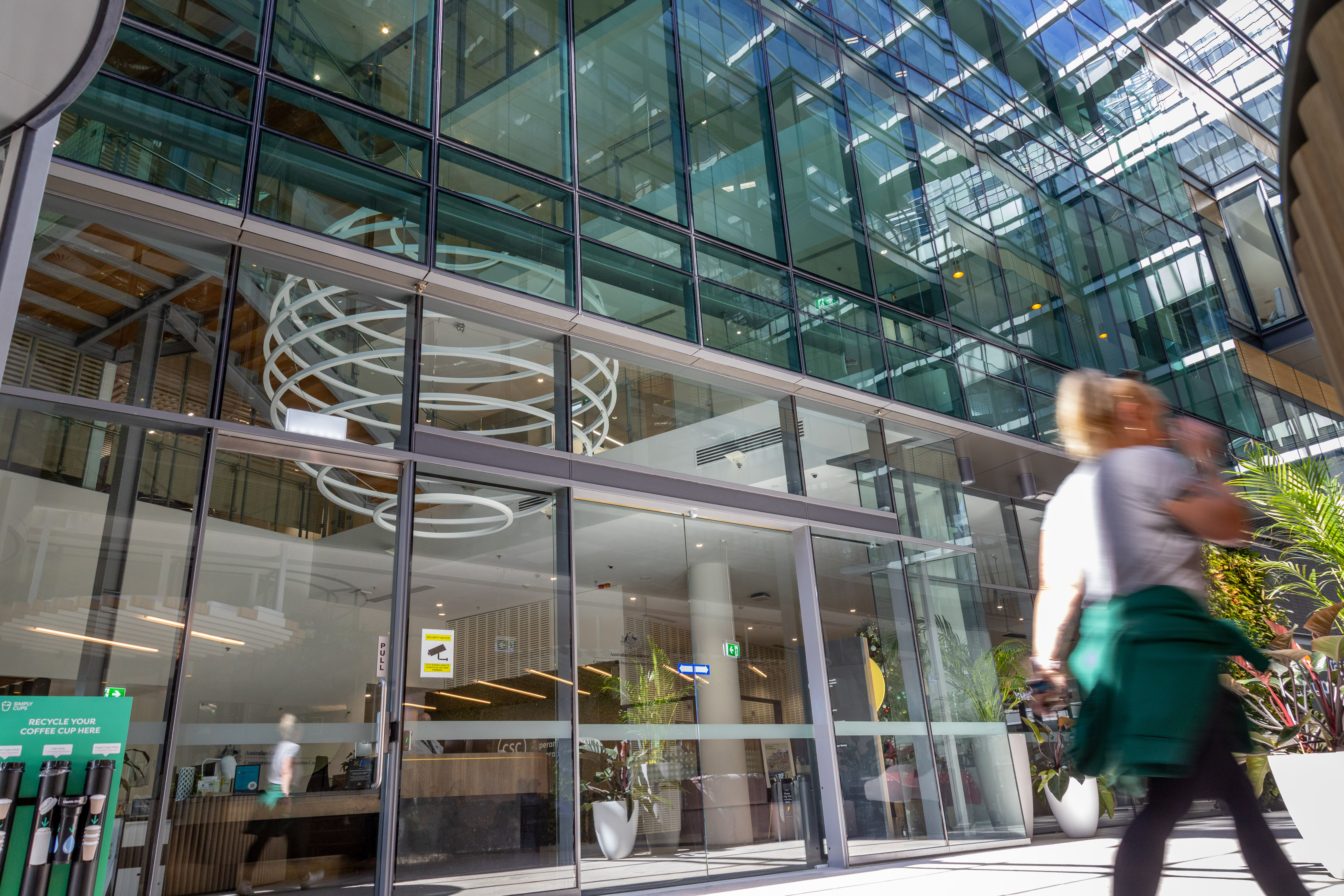
Sustainable buildings and workplaces
CSC’s Canberra office incorporates a range of sustainability features designed to reduce energy and water use, including:
- solar panels and rainwater tanks for non-potable water use
- energy efficient chillers and lighting systems
- thermal window coatings to reduce heating and cooling loads
- bee hives on the roof, supporting biodiversity and local ecosystems
These building features complement behavioural initiatives that encourage staff to reduce energy and water consumption.

Small actions, meaningful impact
Sustainability is not just about policies; it’s about everyday decisions. Small changes, multiplied across CSC, can have a significant impact. Through practical initiatives and staff engagement, the aim is to build a culture where sustainability is part of how CSC operates, not an add on.
Small changes, multiplied across a community, can make a real difference.
What this means for you
For CSC customers, corporate sustainability is about long-term confidence.
As a superannuation trustee, CSC supports retirement outcomes that often span decades. Acting sustainably aims to support CSC’s ability to remain stable, resilient and trusted over time.
By reducing its operational footprint, strengthening governance and making careful, long-term decisions, CSC aims to:
-
protect organisational longevity and resilience, supporting the ability to serve customers over the long term
-
manage risk responsibly, including environmental and operational risks that could affect future outcomes
-
operate efficiently, reducing waste and unnecessary costs over time
-
act in a way that reflects what many customers value, particularly those who want assurance their super fund operates responsibly.
Sustainability is not about symbolism. It’s about confidence that your fund is being run with care, foresight and accountability.
Sustainability commitment
CSC is committed to contributing to a sustainable future and improving social, economic and environmental outcomes. Its purpose—to build, support and protect better retirement outcomes— reflects a long term approach to these responsibilities.
This includes ensuring strong governance across operations and being mindful of the environmental and social impacts of everyday practices. Where possible, negative impacts are managed and decisions are made to contribute positively to the broader system in which CSC operates.
CSC is committed to being a Task Force on Climate related Financial Disclosures (TCFD)* compliant organisation. The TCFD recommendations provide a useful framework to increase transparency on climate-related risks and opportunities and are fully supported.
*For more information, refer to https://www.fsb-tcfd.org/
Governance and accountability
Sustainability at CSC is underpinned by governance and transparency. Regulatory expectations, government policy and industry standards are regularly reviewed to make sure practices remain appropriate and up to date.
CSC recognises the importance of measuring progress, transparently reporting where possible, and continually identifying opportunities to improve.
Managing environmental impact
CSC established a Corporate Sustainability Group (CSG) in 2022 to help embed sustainability into everyday business practices. The group focuses on practical, low-cost initiatives that aim to reduce emissions, improve resource efficiency and increase staff awareness.
Reducing CSC’s carbon footprint
Across offices and operations, CSC have implemented a range of measures to reduce energy use, waste and travel related emissions. These include:
-
default double sided, black and white printing using 100% recycled Australian paper
-
energy saving settings on laptops, monitors and meeting room screens
-
increased use of virtual meetings to reduce business travel
-
recycling and organic waste stations in office kitchens
-
sensor lighting and energy efficient lighting upgrades
-
use of waste tracking systems to improve reporting and target further reductions.
CSC’s electricity is sourced from renewable energy under whole of government arrangements. Where CSC has direct influence, the focus is on reducing consumption through behavioural change and smarter use of resources.